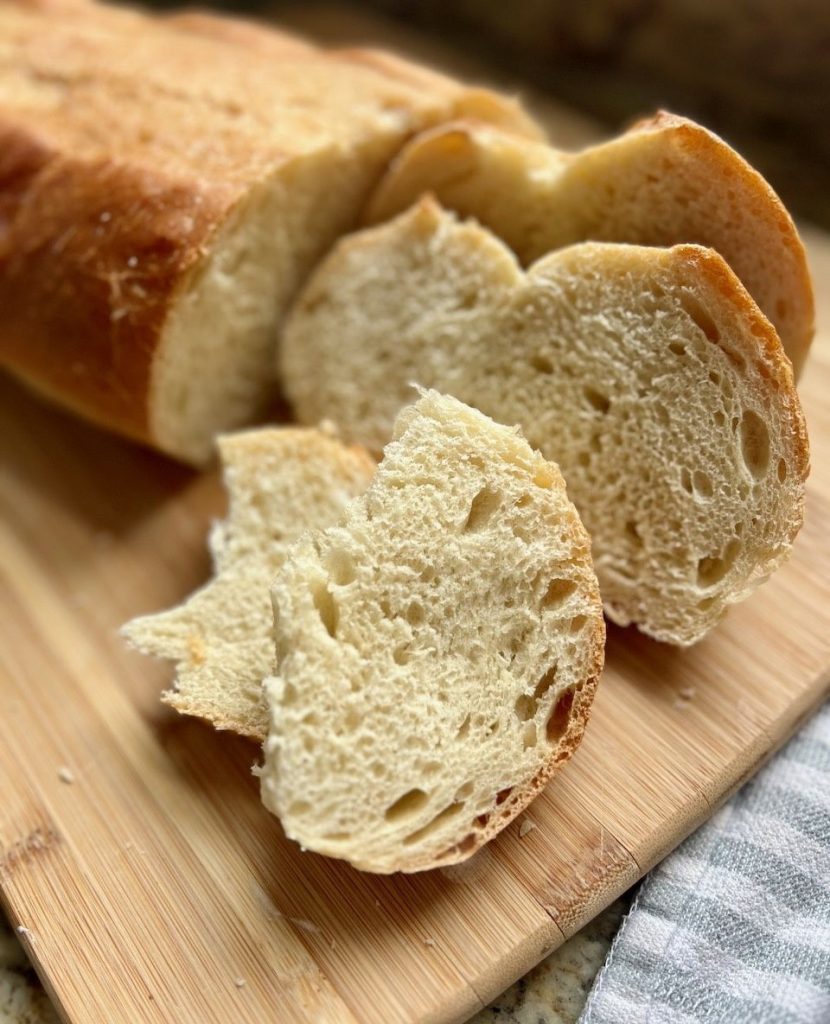
There is something deeply satisfying about pulling a golden, crusty loaf of French bread from the oven — especially when you have made it with ingredients you already have on hand.
This recipe transforms your sourdough discard into a beautifully chewy, crispy-crusted French bread that tastes like it came straight from a bakery. No waste, no fuss, just honest bread made with love.
Why You’ll Love This French Bread
This recipe checks every box you could want from a homemade loaf. The sourdough discard adds a gentle tang that plain white bread simply cannot replicate. The crust bakes up crackly and golden, while the interior stays soft, airy, and perfectly chewy. It is the kind of bread that fills your kitchen with an aroma so good it feels like a reward just for making it.
Best of all, it is beginner-friendly. You do not need any fancy equipment or professional baking skills. A mixing bowl, a baking sheet, and a hot oven are really all it takes. This recipe also comes together in just a few hours, making it a realistic weeknight project — not just a weekend commitment.
Ingredients
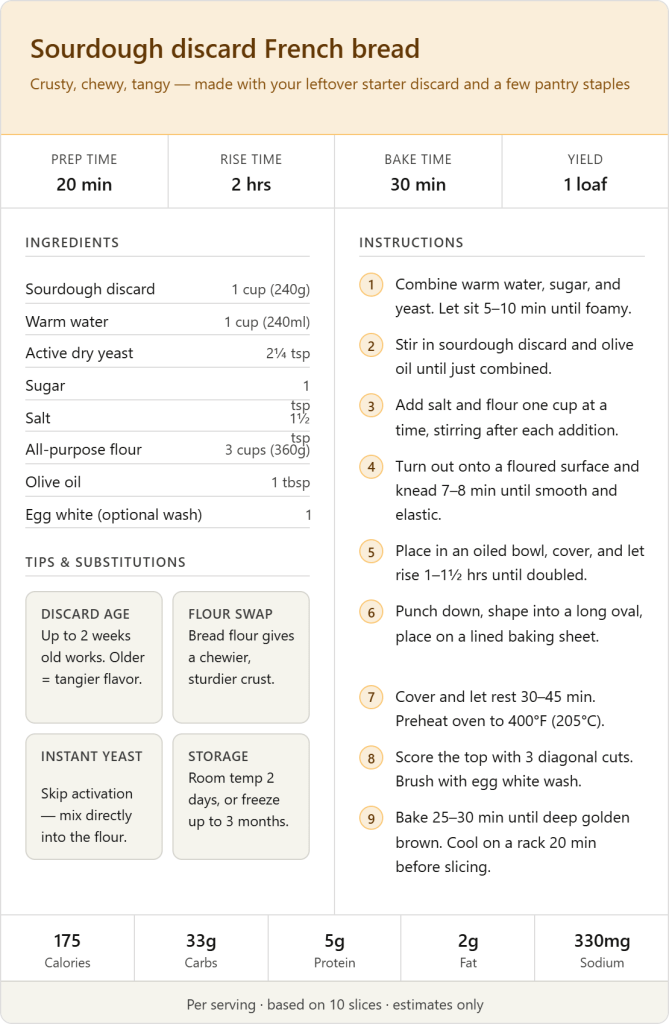
- 1 cup (240g) sourdough discard, unfed and at room temperature
- 1 cup (240ml) warm water (about 110°F / 43°C)
- 2¼ teaspoons active dry yeast (one standard packet)
- 1 teaspoon sugar
- 1½ teaspoons salt
- 3 cups (360g) all-purpose flour, plus more for dusting
- 1 tablespoon olive oil
- 1 egg white (for egg wash, optional but recommended)
Step-by-Step Process
Step 1 — Activate the yeast. In a large mixing bowl, combine the warm water, sugar, and yeast. Stir gently and let it sit for about 5 to 10 minutes. You should see it become foamy and fragrant. If nothing happens, your yeast may be old — start fresh.
Step 2 — Add the discard. Stir in the sourdough discard and olive oil until combined. The mixture will look slightly lumpy and that is perfectly fine.
Step 3 — Mix the dough. Add the salt and flour one cup at a time, stirring after each addition. Once the dough begins to pull away from the sides of the bowl, turn it out onto a lightly floured surface.
Step 4 — Knead. Knead the dough for 7 to 8 minutes until it is smooth, elastic, and just slightly tacky. If it sticks to your hands, dust with a little flour — but resist the urge to add too much, as a slightly sticky dough yields a lighter crumb.
Step 5 — First rise. Shape the dough into a ball, place it in a lightly oiled bowl, and cover with plastic wrap or a damp kitchen towel. Let it rise in a warm spot for 1 to 1½ hours, until doubled in size.
Step 6 — Shape the loaf. Punch the dough down gently, then turn it out onto your floured surface. Shape it into a long oval or baguette-style log. Place it on a parchment-lined baking sheet.
Step 7 — Second rise. Cover loosely and let the shaped loaf rest for another 30 to 45 minutes while you preheat your oven to 400°F (205°C).
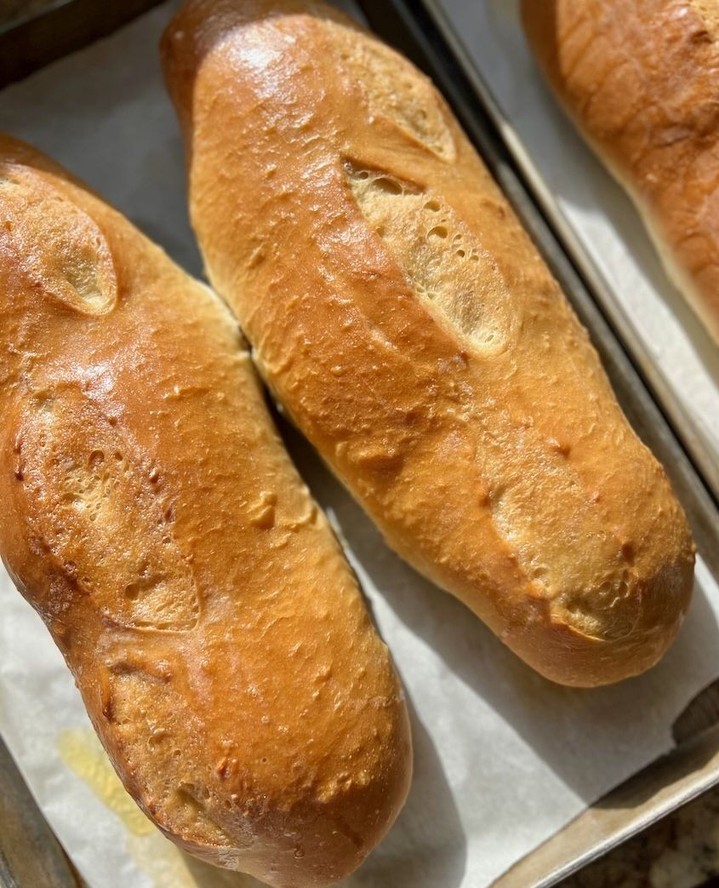
Step 8 — Score and bake. Using a sharp knife or bread lame, make three diagonal slashes across the top of the loaf. Brush with egg white if using. Bake for 25 to 30 minutes, until deep golden brown. The crust should sound hollow when tapped on the bottom.
Step 9 — Cool before cutting. Let the bread rest on a wire rack for at least 20 minutes before slicing. This allows the interior to set properly.
What Kind of Sourdough Discard Should I Use?
For this recipe, unfed sourdough discard works best — the kind you pull from your starter jar before refreshing it. It can be straight from the refrigerator or at room temperature, though room temperature discard blends in more easily.
The older the discard, the more sour the flavor will be. If you prefer a milder loaf, use discard that is no more than a week old. If you love a pronounced tang, feel free to use older discard, up to two weeks. Either way, because this recipe also uses commercial yeast, the rise time is reliable and consistent regardless of how active your discard is.
Options for Substitutions
- Bread flour can replace all-purpose flour for a chewier, sturdier crust with more structure.
- Whole wheat flour can replace up to one cup of the all-purpose flour for a nuttier, heartier flavor. Add a splash more water if the dough feels stiff.
- Instant yeast works just as well as active dry — simply skip the activation step and mix it directly into the flour.
- Honey can replace the sugar for a slightly richer, more complex sweetness.
- No egg wash? Brushing the loaf with plain water or a little milk gives a similar shine.
What to Serve With French Bread?
This bread is versatile enough to pair with almost anything. Serve thick slices alongside a hearty bowl of tomato soup or French onion soup for a classic combination. It is wonderful with a cheese and charcuterie board, torn into chunks for dipping into olive oil and balsamic vinegar, or simply spread with salted butter while still warm.
For a more substantial meal, use it as the base for bruschetta, garlic bread, or open-faced sandwiches topped with smashed avocado, roasted tomatoes, or sliced deli meats.
Storage Instructions
Store the cooled loaf at room temperature wrapped in a clean kitchen towel or placed in a paper bag. It stays fresh for up to two days. For longer storage, wrap it tightly in plastic wrap and freeze for up to three months. To refresh a frozen loaf, thaw at room temperature and warm it in a 350°F (175°C) oven for 10 minutes — it will taste nearly freshly baked.
Avoid storing it in a plastic bag at room temperature, as this softens the crust and can encourage mold faster.
Estimated Nutrition
Per serving (based on 10 slices per loaf):
| Nutrient | Amount |
|---|---|
| Calories | ~175 kcal |
| Carbohydrates | 33g |
| Protein | 5g |
| Fat | 2g |
| Fiber | 1g |
| Sodium | 330mg |
Note: Nutrition values are estimates and will vary based on exact ingredients and portion sizes.
How to Serve
For the best experience, serve this bread while it is still slightly warm. Cut it into thick, generous slices and let people help themselves. A small bowl of olive oil seasoned with herbs, a dish of soft butter, or a ramekin of whipped ricotta alongside it turns even a simple meal into something special.
At dinner parties, it works beautifully as a table centerpiece that guests can tear into while chatting — that is the kind of bread this is. Humble, welcoming, and incredibly satisfying.
Recipe Card